
The Meaning Behind the Labels
Each label is inspired by the land and by the history of our family. Together, they tell the story of where we began, how we farm, the people who shaped our path, and what we hope will endure here long after us.

The Estate Pinot Noir
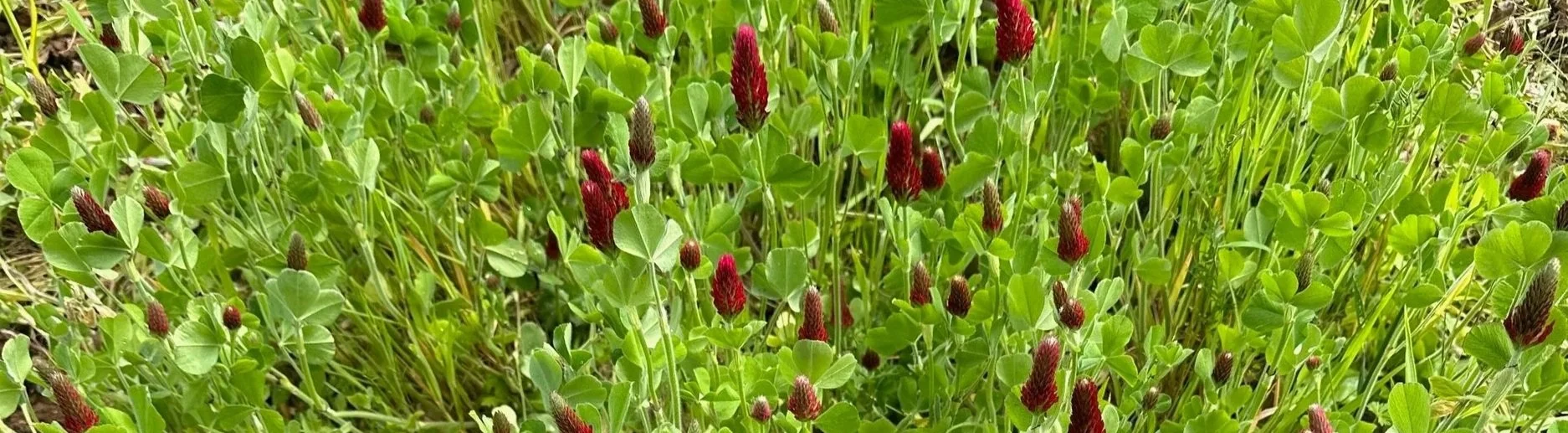
Crimson Clover
Crimson clover is a powerful force in our vineyard. It grows between the rows, doing the work you don’t immediately see — renewing the soil, restoring balance, and preparing the vines for the season ahead.
As part of our organic farming, crimson clover naturally fixes nitrogen in the soil, reducing the need for outside inputs. Its voracious tap roots move deep into the earth, helping loosen and aerate the ground while encouraging the microbial life that keeps the vineyard healthy from below. In spring, when the rows turn vivid red, the blooms draw in beneficial insects that help maintain ecological balance.
For us, crimson clover is a reminder that the character of a wine begins well beneath the surface, in living soil — and that caring for this vineyard for the long term is the work that matters most to us.
Discover our Estate Pinot Noir:

The Estate Chardonnay
Ginkgo
The ginkgo has been on this earth for more than 200 million years. It has outlasted continents shifting and climates changing. Individual trees can live for centuries — some for more than a thousand years — steady, resilient, and powerful.
On our property stands a young ginkgo.
It is still early in its life and finding its shape, reaching a little higher each season. In autumn, its fan-shaped leaves turn a brilliant gold before falling all at once in a luminous sweep. Then winter passes, and in spring it begins again — steady and unchanged in its rhythm — but reaching a little higher.
There is something meaningful about planting a young tree from such an ancient and long-lived line. It reminds us that longevity begins quietly. It starts small. It grows season by season.
For us, the ginkgo reflects how we view this vineyard. We farm this hillside knowing we are only here for a chapter. The decisions we make — in the soil, in the vines, and in the surrounding ecosystem — are guided by the intention that what we nurture today will strengthen and sustain this place long after we are gone.
Discover our Estate Chardonnay:

The Estate “Rows of Sharon” Pinot Noir
Rose of Sharon
The Rose of Sharon on this label is a tribute.
The Estate “Rows of Sharon” Pinot Noir is named in honor of our mothers — women whose strength, perseverance, wisdom, and encouragement helped make Lonesome Rock possible. The wine is both personal and universal: a nod to the matriarchs who shape families, steady communities, and pass down resilience from one generation to the next.
The Rose of Sharon has long symbolized endurance and beauty that persists through hardship. Its bloom appears in late summer, bright and luminous.
This wine stands as an homage — to our mothers, and to all women whose guidance shapes the paths we walk.
Discover our Estate “Rows of Sharon” Pinot Noir:
La Grenade “Les Larets” Bourgogne Aligoté
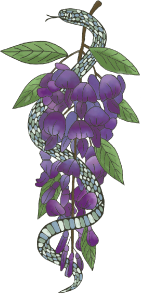
Wisteria
The wisteria on our Aligoté label carries us back to France — a living thread that connects our beginnings in Burgundy to the work we do today.
This wine is made in the historic village of Curtil-Vergy, at the first vineyard where Danny ever worked. He arrived there young and eager, learning the rhythm of the seasons under the watchful eye of the Chaley family. It was in those rows that he began to understand that wine isn’t “made” in the cellar — it’s grown in the vineyard, shaped by daily decisions and attention to the land.
In spring, the stone walls and quiet streets of this village are draped in cascading wisteria blooms, their fragrance lingering in the cool air.
For us, the wisteria is simply a way of remembering and saying thank you.
This wine is a nod to those early years, to that village, and to the Chaley family who took the time to teach, to guide, and to trust a young winemaker with responsibility. It’s a reminder of the enduring influence of Burgundy on our work here at Lonesome Rock.
Discover our La Grenade “Les Larets” Bourgogne Aligoté:
The Snake
The Guardian of a Sacred Space
The snake — it was the first animal we encountered on the day we moved onto the property in 2021 — a moment both unexpected and strangely fitting. In the vineyard world, snakes are part of the ecosystem, moving silently through the grasses, and asking little of the land.
Curious about its symbolism, we began researching its historical meaning.
In many ancient cultures, it wasn’t something to fear, but something protective — believed to guard sacred ground. In Greece, the serpent was linked to Asclepius, a symbol of healing and renewal. Across civilizations, it carried a dual meaning: guardian and regeneration.
That dual meaning resonates deeply with us. It is an affirmation that this hillside is sacred to us — a reminder that we are here as caretakers, entrusted not only to guard and respect this place, but to nurture its continual renewal, season after season.